Obesity is widespread in the U.S. and other parts of the world. But have you ever wondered: if human bodies are built to survive, why would they become obese? Wouldn’t a body have built-in mechanisms to manage the amount of fat it’s carrying?
That’s a very reasonable thing to expect, and in fact it’s true—bodies DO have such built-in safeguards. And one of the most important of these is a hormone called leptin.
In an earlier article, we discussed the fact that the fat in your body produces and releases hormones that influence and affect other body processes. In the 1990’s, leptin was identified as one of those hormones.
To understand what leptin does, let’s shift our attention for a moment from fat to the organ you use to control how your body operates and what it’s doing at any given moment: your brain. In particular we’re going to talk about a part of the brain that manages many aspects of your body’s operation and health. That’s called the hypothalamus.
The hypothalamus is essentially a computer. It gets two kinds of input—messages from your nerves, and messages that travel through your bloodstream in the form of hormones. And one of those messenger hormones is leptin.
When the fat tissues in your body increase, so do the leptin levels in your blood. And as they rise, they stimulate the hypothalamus to do two things—reduce your appetite and increase your metabolism.
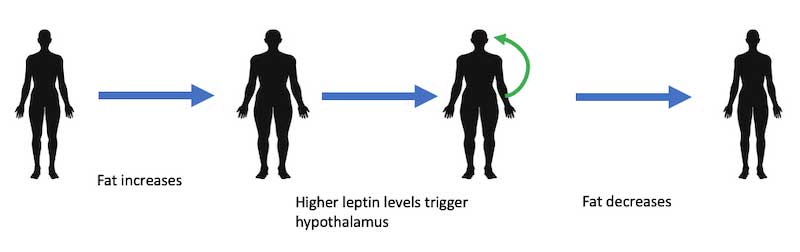
At least that’s the way it’s supposed to work. Unfortunately, it sometimes doesn’t: when the hypothalamus is exposed to high levels of leptin for a period of time, the response weakens. That’s called leptin resistance.
Fortunately, there are other ways to influence our bodies’ response to leptin. Understanding what those are, and why they work, is a primary topic of an upcoming new course called “Energy Regulation.” But there are five things you can do that are likely to improve just about every aspect of your health, including response to leptin:
- avoid eating processed foods and especially ultra-processed foods
- reduce or eliminate consumption of refined carbohydrates
- eat plenty of fresh vegetables and healthy fats
- be physically active and get regular exercise
- make getting a good night’s sleep a priority
You can learn more about any of these by using the search function on our content pages.